

case studies
Real-world examples demonstrating how SPR transforms operational challenges into measurable business results.
Order-to-Cash Process Improvement
Challenge: SOS Security, an IT Hardware Distribution company, was experiencing cash flow challenges driven by an average accounts receivable aging of 99 days.
Approach: Conducted root cause analysis by interviewing key customers, mapping internal order-to-cash workflows, and evaluating how purchase orders, invoices, shipping documentation, and customer procurement processes interacted.
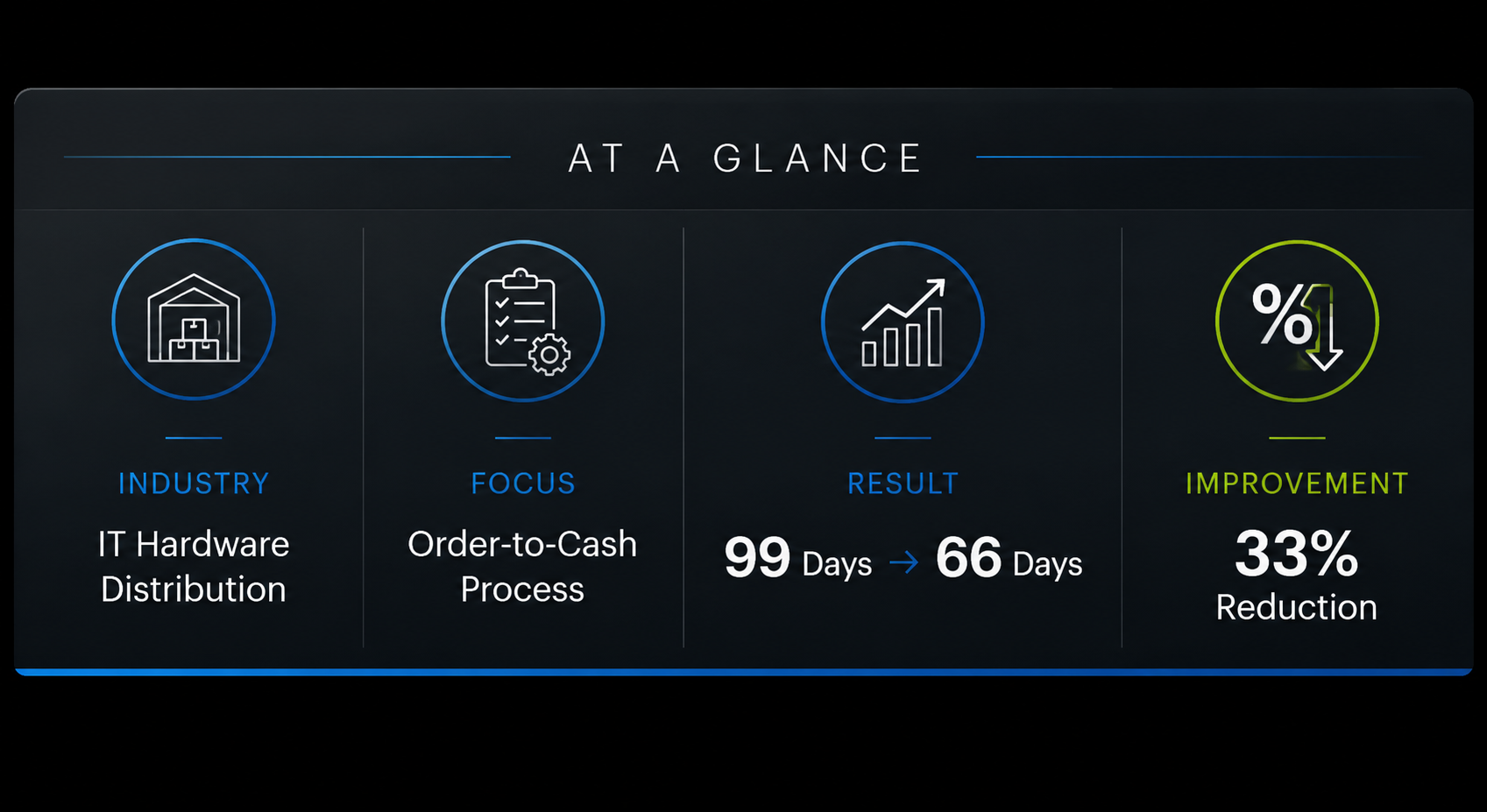
Results: Identified that invoices were being issued upon receipt of customer purchase orders rather than shipment, causing invoices to age before customers would complete their required 3-way match (P.O., invoice, and BOL). Recommended and implemented changes to the invoicing process that aligned billing with common customer procurement workflows, reducing average accounts receivable days outstanding by 33% and improved company cash flow.
Procurement Governance & Approval strategy
Challenge: While supporting IT Procurement at McDermott, a global EPC firm, I observed that purchase orders required numerous approval levels, yet a purchase order containing a significant pricing error still progressed through the approval process unnoticed.
Approach: Rather than viewing the issue as an isolated mistake, I evaluated the procurement approval workflow to understand why multiple approval layers failed to prevent a material error. The analysis revealed that excessive approvals can unintentionally dilute ownership, leading individuals to assume someone else would identify potential issues. I recommended simplifying the approval structure and reviewing approval thresholds to establish clearer accountability while improving procurement efficiency.
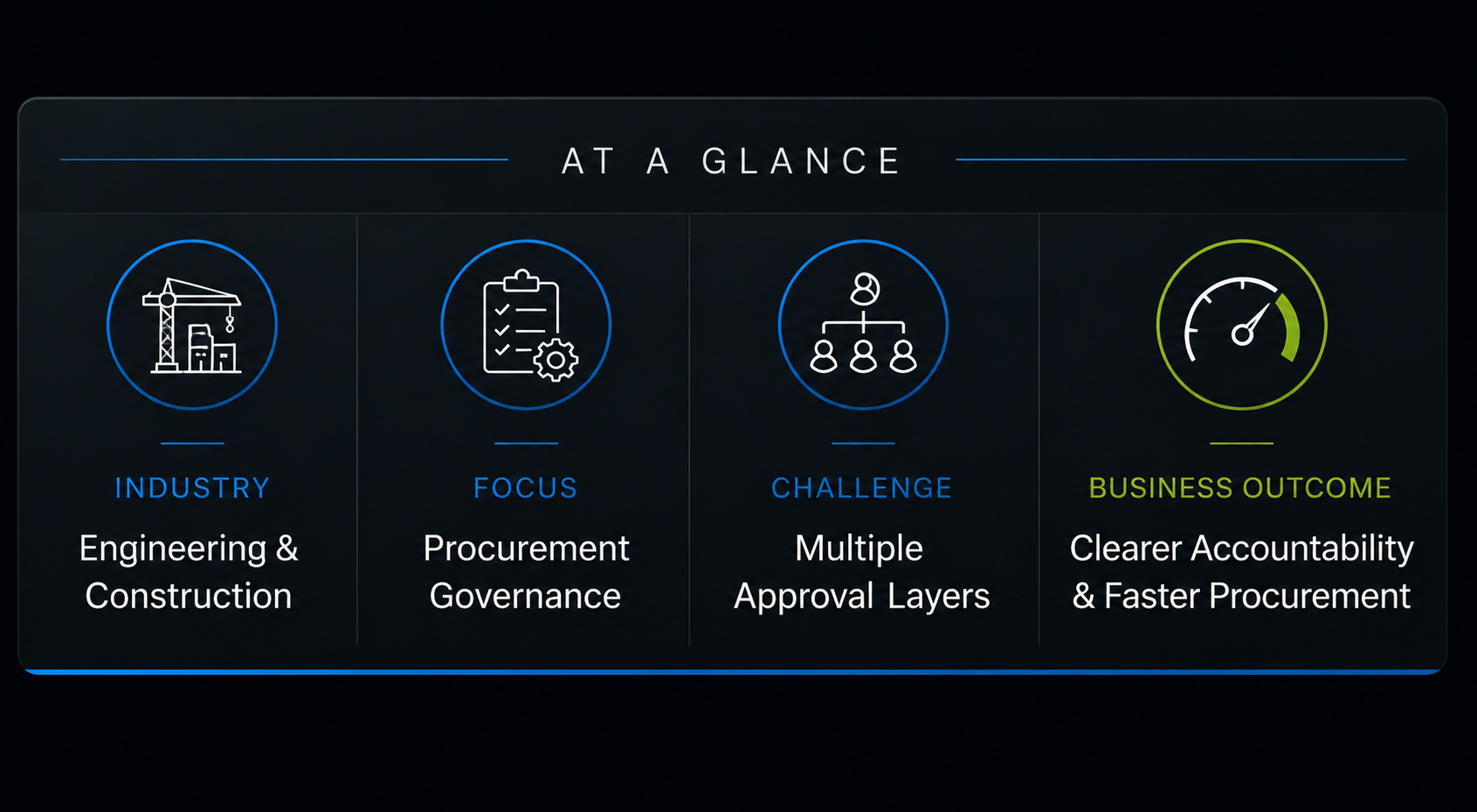
Results: Demonstrated that effective governance can be achieved without unnecessary approval complexity. Recommended simplifying approval thresholds and assigning clear decision ownership to reduce purchase order errors, accelerate purchase order issuance to support production and project schedules, free procurement resources for higher-value work, while still maintaining appropriate governance.
Raw material visibility and 3PL Coordination
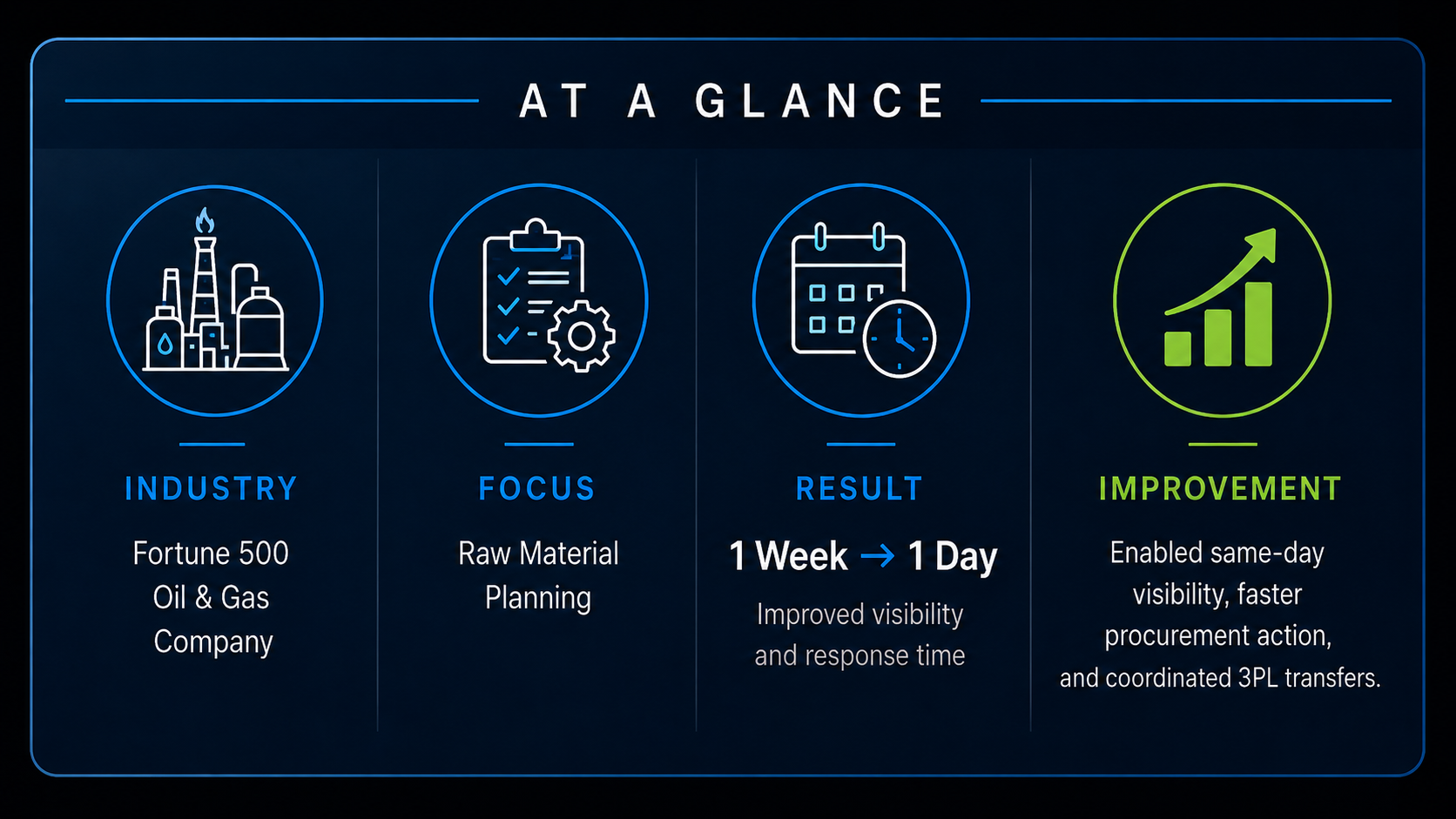
Challenge: While supporting a Fortune 500 oil and gas company, production schedules were planned approximately four weeks in advance, but priorities could shift shortly after release. The team needed clearer visibility into which raw materials were already available on-site, which materials needed to be pulled from a third-party warehouse, and which materials needed to be purchased to stay ahead of the production plan. Because schedule changes could happen quickly, manual analysis created delays in identifying shortages, coordinating warehouse transfers, and triggering procurement actions.
Approach: Developed an automated raw material planning dashboard that compared the latest production schedule against current inventory, third-party warehouse inventory, and open procurement requirements to identify shortages in real time. The model provided immediate visibility into what inventory was available, what needed to be transferred from the third-party warehouse, and what needed to be purchased to support production. In addition, the tool calculated the pallet count, packaging count, and trailer count required for each transfer. To streamline execution, it also automated the creation of packing slips and generated notification emails to the third-party warehouse, improving both the calculation and the communication required to support production changes.
Results: Reduced raw material visibility and response time from approximately one week to one day by automating shortage identification, transfer planning, and procurement triggers. The dashboard enabled the team to act more quickly on raw material gaps, initiate procurement needs immediately, and coordinate third-party warehouse transfers with greater accuracy and speed. By automating both the operational calculations and the warehouse communication process, the solution improved production readiness, reduced manual analysis, and strengthened the organization’s ability to respond to changing production schedules.
Enterprise consignment risk & supply strategy
Challenge: Executive leadership Client was considering consignment of a high-cost proprietary specialty raw material to improve availability and delay cash outflow. My cross-functional risk assessment identified concerns across demand reliability, customer payment terms, storage conditions, administrative controls, and inventory exposure.
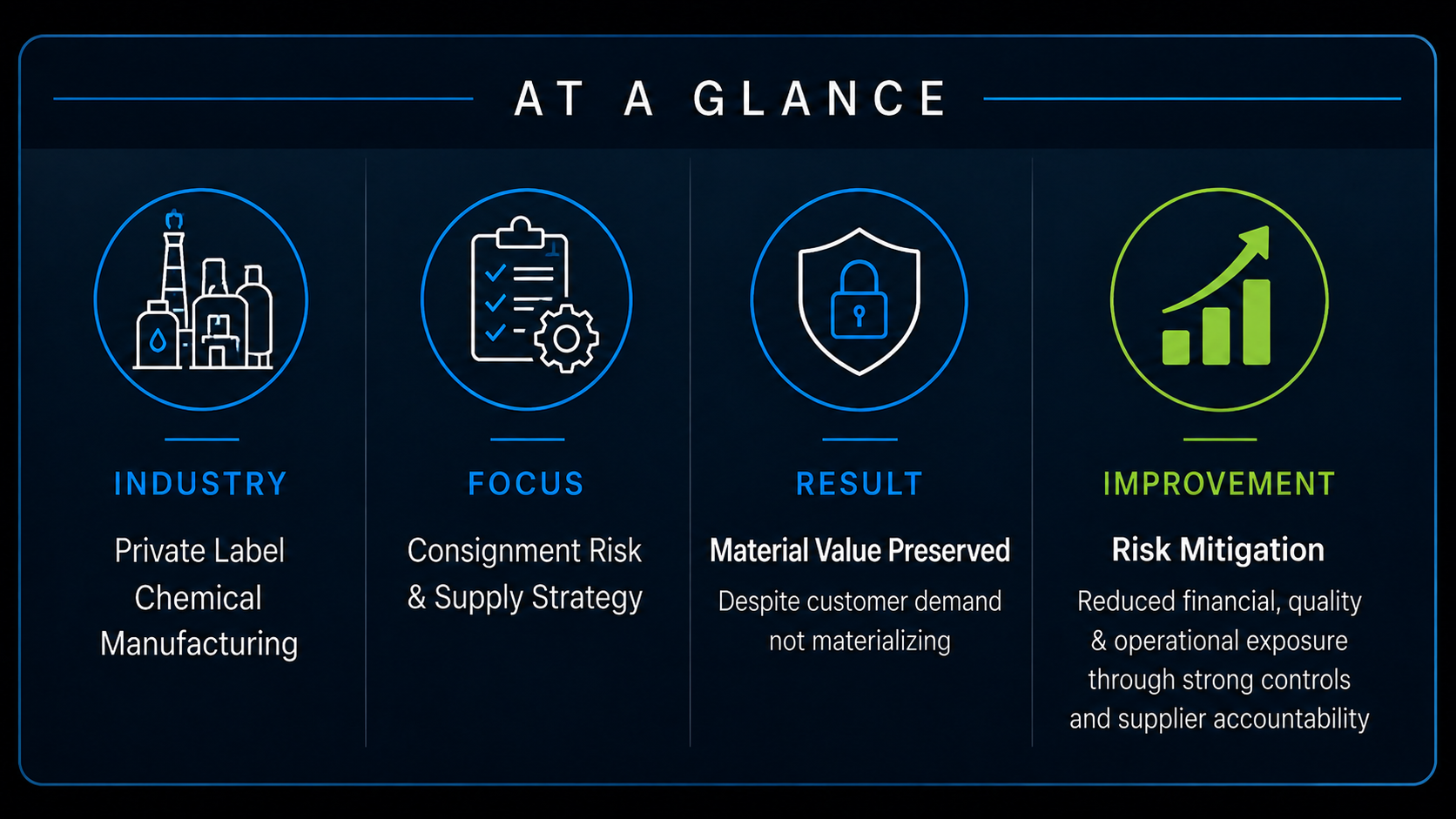
Approach: Although my recommendation was not to proceed with consignment, the Client elected to move forward. I shifted from recommendation to risk mitigation—negotiating extended payment terms, structuring purchase orders to limit financial exposure, shifting administrative responsibilities to the supplier, documenting supplier-recommended handling requirements along with training Warehouse Personnel, and negotiating protective material-handling accessories.
Results: Customer demand ultimately did not materialize as anticipated, validating one of the original risks. However, the controls built into the agreement—particularly the material-handling protections—helped preserve the high-value inventory and reduce the potential operational and financial consequences.
Operations Readiness & Logistics Process Optimization
Challenge: While consulting a start-up business unit at ExxonMobil, I identified recurring loading delays for customer pickup orders because Sales was accepting customer pickup requests outside of the established Service Level Offering (SLO) without consistent operational visibility. Operations were frequently caught off guard by customer arrivals, resulting in loading delays of up to 10 hours and frustrated customers.
Approach: Rather than simply reinforcing the existing Service Level Offering (SLO), I developed a four-part operational readiness strategy that balanced operational efficiency with the flexibility Sales needed to meet changing customer and market demands:
Reinforced SLO expectations while preserving Sales' flexibility to meet customer and market demands through controlled exceptions.
Designed an approval-gate workflow for SLO exceptions, providing Operations with advance visibility into upcoming customer pickups.
Automated customer order confirmations so approved SLO exceptions consistently communicated critical pickup instructions and ISO tank equipment requirements.
Developed a standardized Customer Pickup Guide and Readiness Checklist for Sales, Operations, customers, and carriers to ensure consistent communication and pickup readiness.
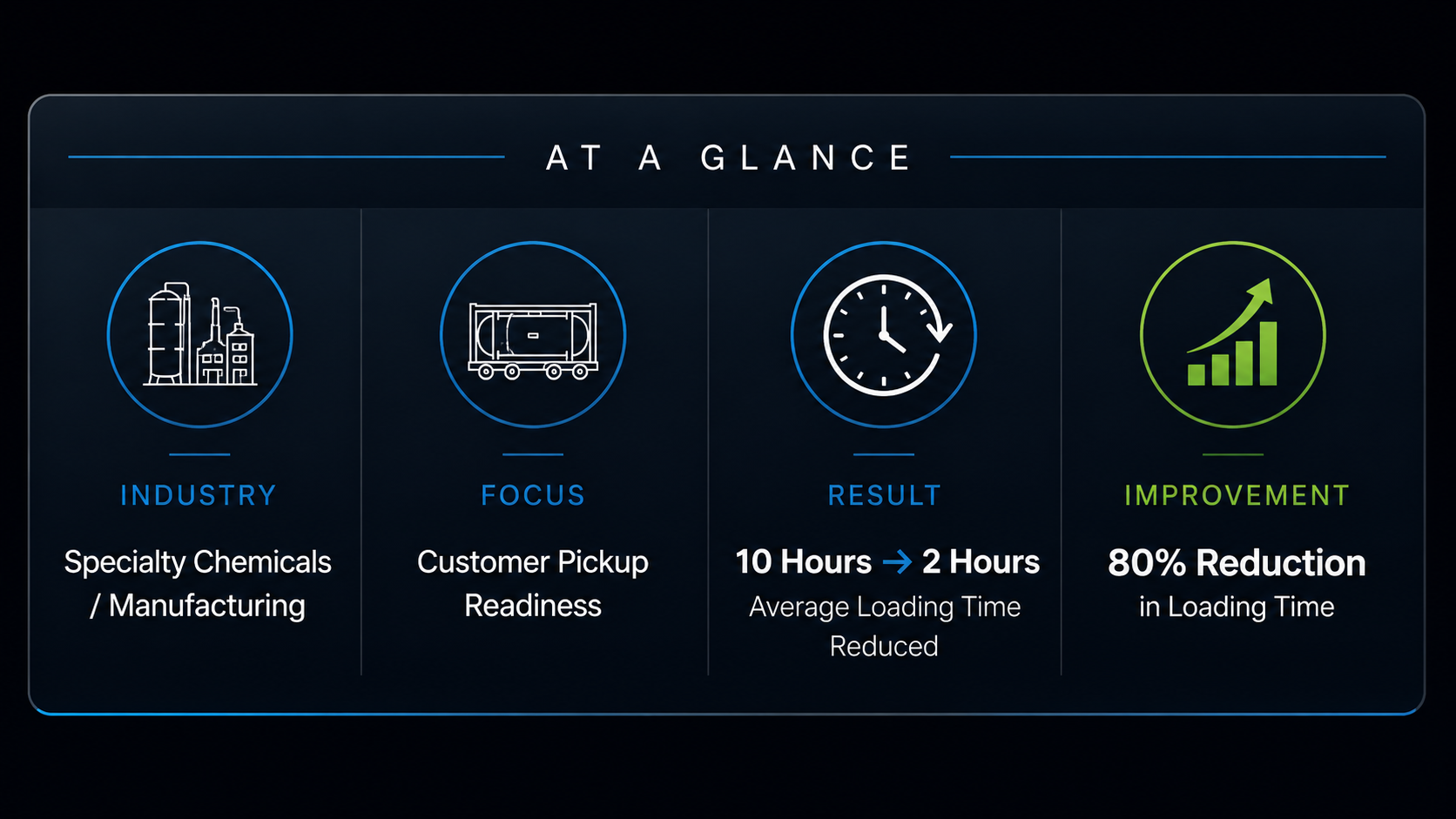
Results: Reduced average customer pickup loading times from 10 hours to approximately 2 hours by improving operational visibility, standardizing communication, and establishing a consistent customer pickup process. The new framework enabled Sales to remain responsive to market demands while allowing Operations to proactively prepare for customer pickups, resulting in stronger cross-functional alignment, improved customer satisfaction, and a scalable operational framework for future customer pickup requests.
Market Expansion & Competitive Growth Strategy
Challenge: As Inventive Events, an event consulting service organization, expanded throughout the Houston market, growth opportunities were constrained by limited internal capacity and increasing competition from other event production companies.
Approach: Rather than relying solely on organic growth, I developed and executed a strategic acquisition plan by integrating two local event planning companies into the organization. The transition standardized processes, expanded service capacity, retained experienced coordinators, and strengthened regional market coverage while reducing direct competition.
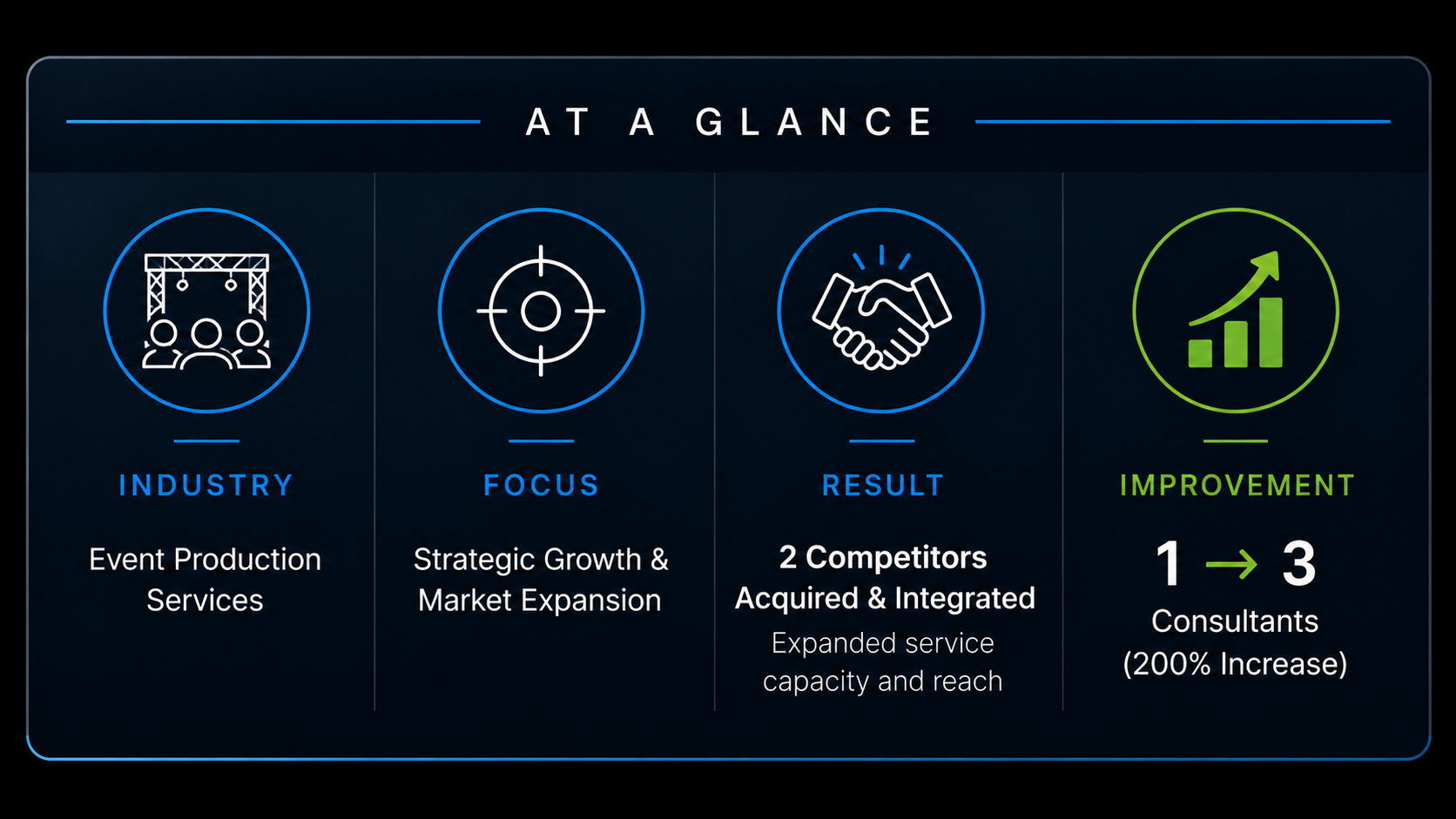
Results: Successfully expanded a multi-region service organization by strategically acquiring and integrating two local competitors, increasing market share, expanding service capacity, strengthening operational scalability, and reducing competitive pressure.
Production Agility & Inventory Visibility
Challenge: While building the Supply Chain department at Synsus, a private label chemical manufacturing company, production schedules frequently changed after planning meetings, often shifting production sequences and even moving manufacturing between facilities. Inventory, purchase orders, and material transfers didn't automatically adjust to those changes, resulting in shortages, stranded inventory, costly expediting, and reactive planning.
Approach: Developed an automated VBA planning dashboard that compared revised production schedules against inventory positions, identified shortages, highlighted stranded inventory, and flagged purchase orders and inventory transfers requiring rerouting—giving leadership immediate visibility into the downstream impact of production changes.
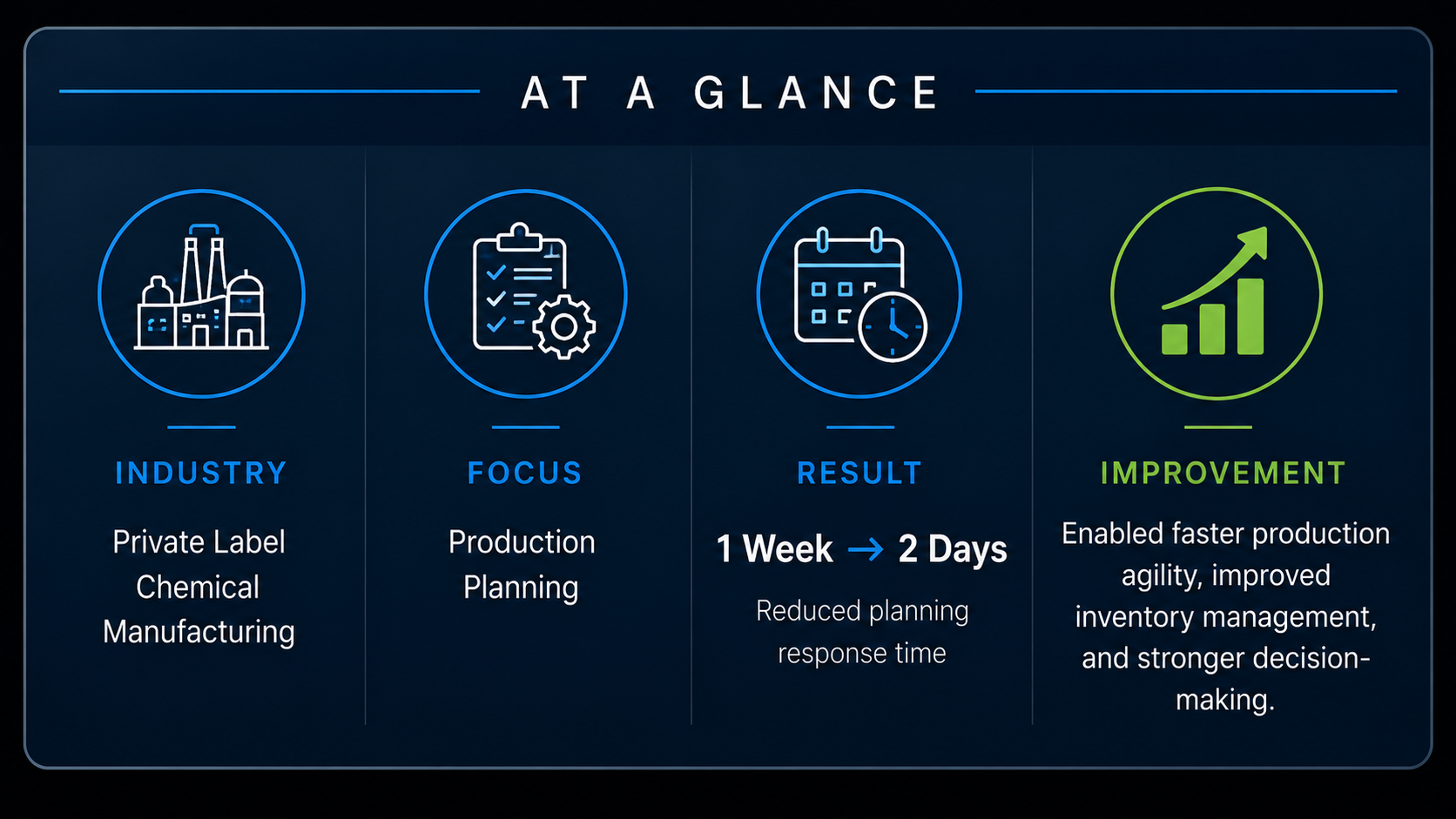
Results: Reduced production planning response time from approximately one week to two days by automating inventory impact analysis and material planning. This enabled the organization to respond more quickly to changing production priorities while improving inventory visibility, reducing manual analysis and expedited shipments, and maintaining material availability across multiple manufacturing facilities.